Something popped up from a phone you do not know, or a tile you never turned on has been lit for weeks. Quick Share is Android's built-in nearby sharing. It is on by default, and takes ten seconds to turn off. Here is the switch, whatever your phone calls it.
The quick answer: swipe down twice from the top and tap the Quick Share tile so it goes dark. No tile? The same switch sits in Settings under Connected devices. But look at the visibility list first: setting Quick Share to your own devices stops strangers finding your phone and keeps the feature. Free for iPhone Free for Mac Free for Android Free for Windows

The Quick Settings tile turns Quick Share off in a single tap
Start here. The tile needs no menus and works the same on a Pixel, a Samsung and most other phones:
- Swipe down twice from the top to open the full Quick Settings panel.
- Find the tile named Quick Share. An older phone may still label it Nearby Share.
- Tap the tile once so it goes dark. Quick Share is off.
- If it is missing, tap the pencil or edit button and drag it in from the unused tiles.

Turning off the Quick Share tile also stops you sending files
Four things to know about the Quick Share tile before you rely on it:
- Turning the Quick Share tile off hides your phone and also stops you sending. It is not a receive-only switch. Turn it back on to share a photo.
- Holding your finger on the Quick Share tile opens the full Quick Share settings. It is the fast way to the visibility options.
- The Quick Share tile is missing from many phones only because nobody added it. Android shows a few by default. The rest wait in the edit list.
- An Android phone with no Quick Share tile and no Quick Share setting was sold without Google's apps. Quick Share ships with Google Play services, not with Android itself.

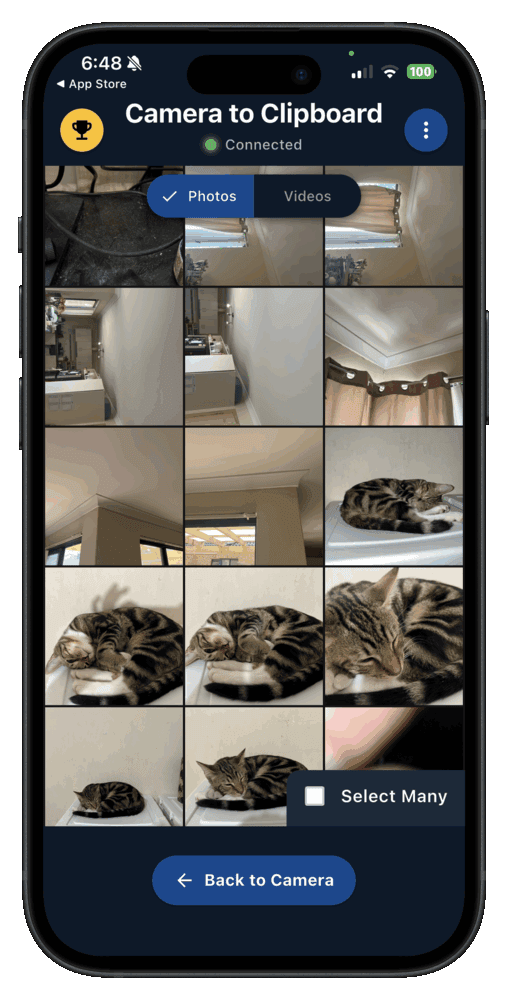
Camera to Clipboard puts an Android photo on your computer clipboard
Maybe you wanted a photo from your phone on a PC or a Mac. That is a different job, with a shorter answer.
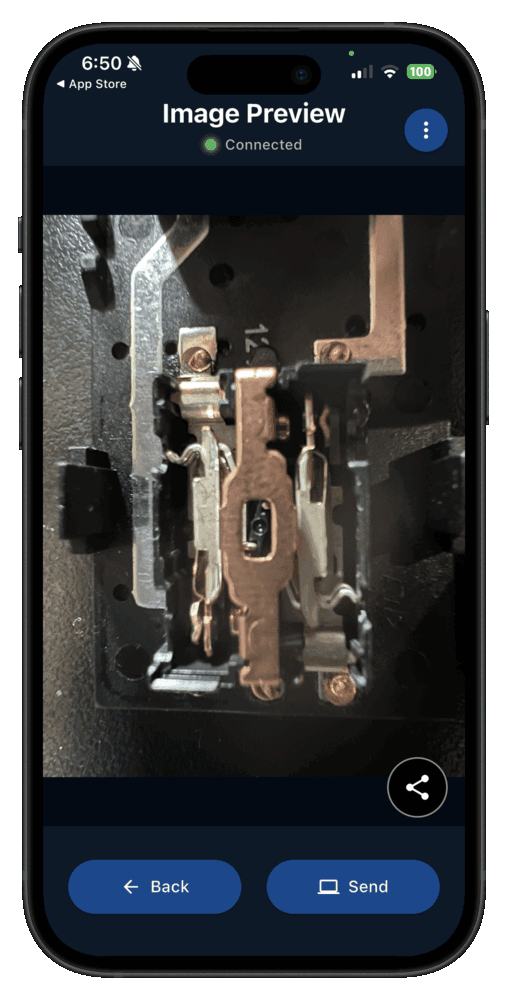
- A photo sent from an Android phone with Camera to Clipboard lands on the computer's clipboard, not in a folder. Press Ctrl + V on Windows or Cmd + V on a Mac. There is nothing to find or attach.
- Camera to Clipboard sends the photo straight from the Android phone to the computer over your own Wi-Fi. Nothing is uploaded to a cloud. The two apps use the internet only to find each other, so a phone hotspot works too.
- Camera to Clipboard works with a Mac, which Quick Share has never done. It works with Windows too.
- Camera to Clipboard sends one Android photo or a whole batch at once. Gallery photos, videos and scanned documents go the same way.
- Camera to Clipboard is a separate app and does not change your Quick Share setting. Keep Quick Share off, or set to your own devices.
Set up Camera to Clipboard once by scanning a QR code
Four steps get your first Android photo onto the computer:
- Install Camera to Clipboard on the Android phone and the desktop app on your PC or Mac.
- Pair once by scanning a QR code. It takes about ten seconds.
- Take or pick a photo on the phone and send it.
- Press Ctrl + V or Cmd + V on the computer.
Free to download and try on both ends. The free version adds a small watermark and caps photos at 1920px. Pro removes both.

The Settings app keeps the Quick Share switch under Connected devices
The tile is faster, but Settings holds the other controls, including who can see your phone. Menu names differ by maker, so the steps below are loose:
- Open Settings and go to Connected devices.
- Open the connection preferences section. Some phones show Quick Share right on the Connected devices screen.
- Tap Quick Share, or Nearby Share if that is the name shown.
- Turn off the switch at the top of that screen.

Search Settings for Quick Share when the menu path does not match
If a step above does not match your phone, one of these explains why:
- Typing "quick share" into the Settings search box finds the Quick Share screen on any Android phone. Search works even when your phone maker renamed the menu.
- Samsung, Pixel and other Android makers lay out Settings differently, so no single Quick Share menu path fits every phone. Pixels bury it behind connection preferences. Samsung puts it higher up. Either path reaches the same screen.
- A phone that shows Nearby Share and no Quick Share is not missing anything, because the two are the same feature. The name changed in 2024, and older phones kept the old label.
- The Quick Share settings screen also opens from the Share button on a photo. Tap Share, open Quick Share, then tap the gear or three dots.

Quick Share is on every Android phone and was called Nearby Share
Most "I cannot find this setting" moments come down to the name. A short history helps:
- Quick Share is on every modern Android phone, not only Samsung ones. Samsung used the name for four years before 2024, so search results still show mostly Galaxy phones.
- Google's Nearby Share and Samsung's Quick Share were rivals that merged into one feature in 2024. It kept the Quick Share name. Google users saw a rename, not a replacement.
- An Android phone that has not updated since 2024 still calls the setting Nearby Share. Nothing is broken. Look for either name.
- Guides written before 2024 treat Nearby Share and Quick Share as rivals, so their steps contradict each other. Some still rank high in search. They were right at the time.
- Quick Share does the same job on Android as AirDrop does on an iPhone. Pick a photo, tap share, choose a nearby phone. The privacy questions asked about AirDrop apply here too.

Only the Everyone setting lets a stranger send you a Quick Share file
Quick Share has four visibility levels that decide who can see your phone. The labels differ by maker, but the levels are always these:
- Quick Share's Everyone nearby level lets any Android phone in Bluetooth range see your phone's name. It is the only level where a stranger can reach you.
- Quick Share's Your contacts level shows your phone only to people saved in your contacts. They must be signed in too, or your phone stays hidden from them.
- Quick Share's Your own devices level shows your phone only to devices on your Google account. Nobody else can see it, but your own tablet and laptop still can.
- Quick Share's Nobody level is the same as off, so your phone is hidden and cannot send. The Quick Settings tile puts you here.
- Quick Share's Everyone setting is meant to be temporary, and many Android phones switch it back after a few minutes. It suits one transfer with someone new, not a permanent setting.

Hide your phone from strangers without turning Quick Share off
Most people hunting the off switch only want strange phones to stop finding theirs. You can do that and keep the feature:
- Setting Quick Share to your own devices stops strangers finding your phone, and you can still send to your own laptop. This is the setting most people actually want.
- You can change the name other people see for your phone on the Quick Share settings screen. Pick something anonymous if you do not want strangers reading yours.
- Turning Quick Share fully off means turning it back on every time you want to send something. Many people turn it off, get annoyed a week later, and turn it straight back on.

Turning Bluetooth off is not how you turn Quick Share off
Quick Share uses more than one radio, which is why it can seem to run after you turn it off:
- Quick Share finds nearby phones over Bluetooth, then sends the file over Wi-Fi. Bluetooth is good at finding devices but too slow to carry a photo.
- Turning Bluetooth off to stop Quick Share also cuts off your headphones, your watch and your car. It is a heavy fix for a feature with its own switch.
- A phone with Quick Share off can still show similar pop-ups, because Bluetooth and Wi-Fi stay on. Headphone pairing, Fast Pair cards and Find My Device use the same radios.
- Quick Share needs no internet connection, because the two phones talk straight to each other. The one exception is Samsung's link option, covered below.
- Older Android versions need Location turned on for Quick Share to work. They treated Bluetooth scanning as a location feature, so some guides still tell you to turn Location on.

You can silence Quick Share notifications and still receive files
Often the pop-ups are the problem, not the feature. You can quiet them and still accept files:
- The Quick Share settings screen has its own switch for the "device nearby is sharing" notification. Turn it off and the pop-ups stop. Quick Share itself still works.
- Holding your finger on a Quick Share notification lets you mute just that type of alert. Other apps' notifications stay as they are.
- Samsung phones have a separate nearby device scanning setting that makes its own pop-ups. It sits with the other connection settings, not inside Quick Share. If pop-ups continue after Quick Share is off, look here.
- A Quick Share file from another person cannot land on your phone until you tap accept. The notification is an offer, not a delivery.
- Quick Share transfers between devices on your own Google account skip the accept tap. Approving your own laptop every time would be pointless.

Samsung's Quick Share link option uploads the file to a server
Samsung phones have a second way to send with Quick Share, and it is different for privacy:
- The direct Quick Share transfer sends a file straight from one phone to the other, with no upload. No copy exists outside the two phones, which is why it works with no signal.
- Samsung's link sharing option in Quick Share uploads your file to Samsung's servers and sends a download link. A copy stays on those servers while the link is live.
- Sending a Quick Share link needs a Samsung account and internet, unlike the direct transfer. If Quick Share asks you to sign in, you picked the link option.
- A Quick Share link expires after a time Samsung sets, so the uploaded copy is not permanent. It is temporary, but it does exist.
- Samsung's Quick Share link can reach someone who is not nearby, which the direct transfer cannot. The cost is that your file goes through a server on the way.

Most Android phones cannot Quick Share to an iPhone or to a Mac
Some people come here because Quick Share did too much, others because it did too little. Here is where it stops:
- Quick Share reaches an iPhone only from recent Pixel, Galaxy and a few other Android phones. Google linked Quick Share to AirDrop in November 2025, starting with the Pixel 10. The Android to iPhone guide lists which phones work.
- Quick Share on Windows is a separate app from Google, not part of Windows. It came years after the Android feature, so many guides never mention a PC.
- Quick Share has no Mac version, so an Android phone has no built-in way to send a photo to a Mac. The Android to Mac guide covers the ways that do work.
- Every Quick Share transfer ends as a file in a Downloads folder. If the photo was for an email, you still have to find it and attach it.
- Turning Quick Share off does not help you put a photo on a computer. Both jobs move a photo off a phone, but need different tools.

Your own devices is the Quick Share setting most people should pick
The four Quick Share settings differ in who can find your phone, who can interrupt you, and whether you can still send.
| Quick Share setting | Who can find your phone | Pop-ups from people you do not know | Can you still send files out | What it suits |
|---|---|---|---|---|
| Everyone nearby | Any Android phone in range | Yes, from anyone nearby | Yes | One transfer with someone new, then switch back |
| Your contacts | People saved in your contacts | Only from people you know | Yes | Sharing with friends and family regularly |
| Your own devices | Only your own signed-in devices | None at all | Yes | Moving files between your own phone, tablet and laptop |
| Quick Share off | Nobody at all | None at all | No, you must switch it back on first | Never wanting to use Quick Share again |

Turn Quick Share fully off only if you never intend to use it
Each problem that brings people here has its own answer. Find yours and stop there.
- Setting Quick Share to your own devices is the right answer if a stranger's phone appeared in your share list. Only your own devices can see your phone, and you lose nothing.
- Turning off the notification switch inside Quick Share is the right answer if the pop-ups are the problem. The alerts stop. Quick Share still works when you open it.
- Turning Quick Share fully off is the right answer only if you never use it. It is the only setting that also stops you sending.
- Checking Samsung's nearby device scanning setting is the right answer if pop-ups continue after Quick Share is off. It is a different feature with its own switch.
- Camera to Clipboard is the right answer if Quick Share would not send a photo to your computer. It puts the photo on the Windows or Mac clipboard over your own Wi-Fi.
Common questions about turning off Quick Share
How do I turn off Quick Share on Android?
Use the Quick Settings tile. Swipe down twice and tap the Quick Share tile so it goes dark. The same switch is in Settings under Connected devices. A phone not updated since 2024 may call it Nearby Share.
Is Quick Share the same thing as Nearby Share?
Yes. Google's Nearby Share and Samsung's Quick Share merged in 2024 under the Quick Share name. Older phones and older guides may still say Nearby Share, and that is the switch you want.
Does turning off Quick Share stop strangers sending me files?
Yes. Setting Quick Share to your own devices also works, and you keep the feature. A stranger can only find your phone on the Everyone setting. Even then, no file arrives until you tap accept.
How do I get a photo from Android to a computer without Quick Share?
Send it straight to the computer's clipboard over your own Wi-Fi. Camera to Clipboard puts an Android photo on a Windows or Mac clipboard. Paste it with Ctrl + V or Cmd + V. There is no cable, no cloud upload, and no file to find.